Rooftops & podium decks
Rooftop gardens
A rooftop is about the hardest place you can ask a plant to live. Full sun, steady wind, heat off the concrete, and every kilo of wet soil counted against the slab. We build gardens for exactly that.
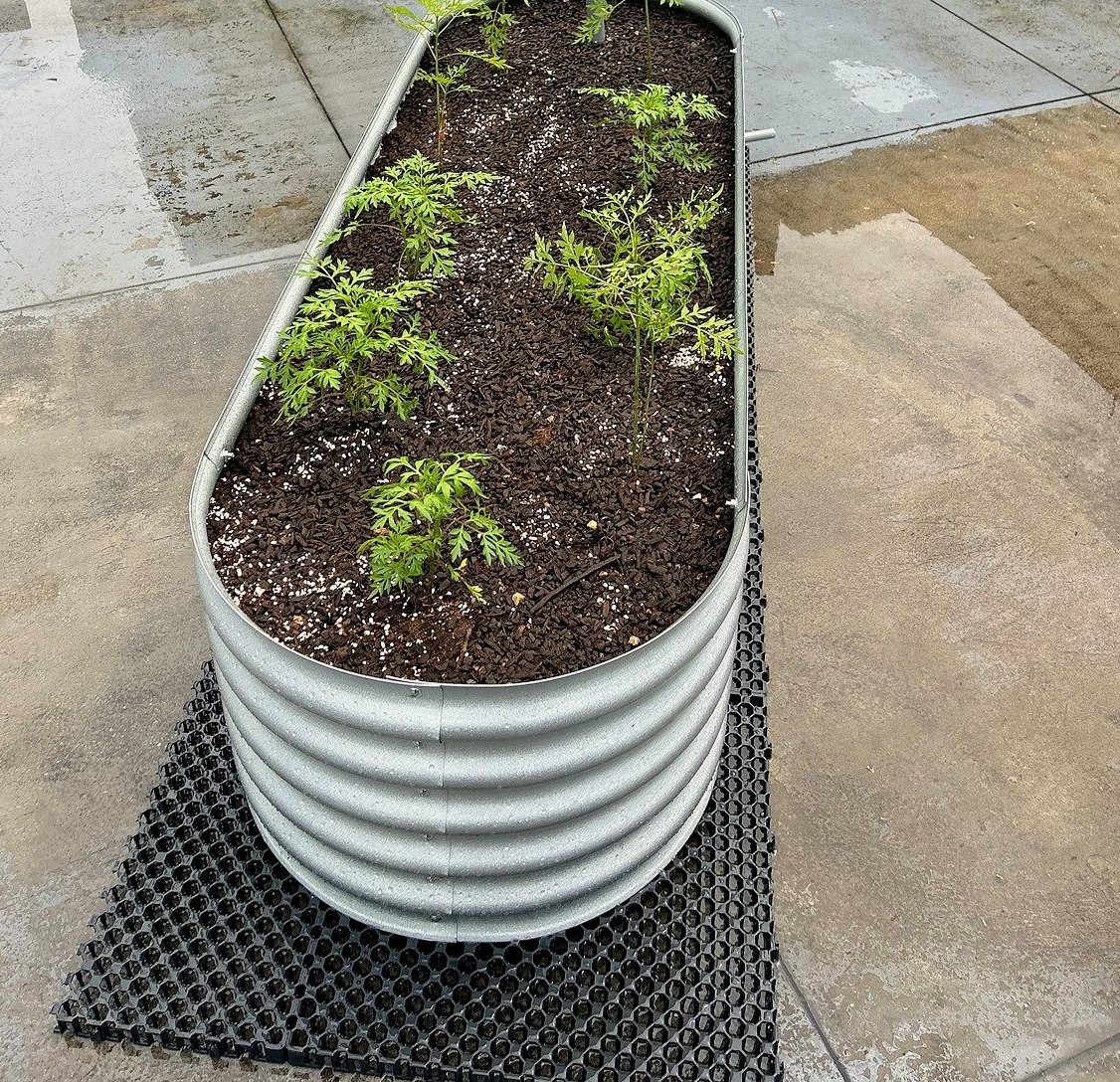
Raised galvanised planters that stand free of the roof. A mix that is light and quick to drain but still holds water through the afternoon. Edible and flowering plants that can take the exposure.
The habitat
It is a soil problem before it is anything else.
Stand on a flat roof in Kuala Lumpur at two in the afternoon and you know what the plants are up against. Four things decide whether a rooftop garden lives.
Full sun
No tree overhead, no neighbour’s wall. Light from sunrise to sunset, and more bounced off glass. Only true sun-lovers belong up here.
Steady wind
Wind pulls water out of leaves and out of the mix. It snaps soft stems and tips tall pots. We plant low and sturdy, and keep planters broad.
Heat off the concrete
The slab soaks up heat all day and gives it back. Roots in a thin pot cook. A deep planter, a mulched surface and an air gap underneath keep them cool.
Weight
Wet soil is heavy, and the building has to carry it. So the mix must be light. It must also drain fast in a downpour and still hold water until evening.
What’s included
Light on the roof. Easy on the building.
We do not dig into a roof, fix anything through it or pile soil against a parapet. Everything we put up there stands free, sits on drainage mats so water can run underneath to the outlets, and can be lifted away if the membrane ever needs attention.
The mix is our own. It is blended for the job: light enough for the slab, open enough to drain in a monsoon downpour, with enough organic matter to hold moisture and feed the plants. On top goes a layer of mulch, which keeps the surface cool and stops the wind drying it out.
- A walk of the roof: sun, wind, water points, drain outlets, access and edges
- Planter layout and mix designed to the loading your structural engineer confirms
- Free-standing galvanised raised planters on drainage mats
- Our own light, fast-draining, moisture-holding rooftop mix
- Edible plants: lemongrass, chilli, herbs and other sun-lovers
- Flowering plants for colour and pollinators, such as lantana, ruellia and hibiscus
- Mulch, plant labels and a watering plan
- Planting days and workshops for tenants, residents and staff
- Ongoing care on a regular schedule
How it works
From bare slab to first harvest.
Walk the roof
We go up with your building team. Where the sun and wind come from, where the water point and the drain outlets are, how materials get up, and how close anyone should be working to the edge.
Get the number
Your structural engineer confirms what the slab can carry. We design the planters, their positions and the depth of mix to that number, and not a kilo over.
Build and plant
Planters assembled on site, set on drainage mats, filled with our rooftop mix, planted and mulched. We work around your building’s lift and loading hours.
Keep it going
Rooftop planters dry out faster than any bed on the ground. We come back on a schedule to water-check, feed, prune, replant and keep the outlets clear. Or we teach your own team to.
Planting days & workshops
A roof garden is better with people in it.
A food garden nobody visits is a row of planters. We can run planting days and hands-on workshops for tenants, residents and staff, so the people in the building know what is growing above them and how to pick it.
Soil and worm compost, sowing seed, raising seedlings, planting out. The same sessions we run for schools and communities, brought up to your roof.
Rooftop garden FAQ
Before you take soil upstairs.
Can our roof take the weight of a garden?
We cannot tell you that, and no landscaper should. A structural engineer must confirm what your slab can carry; we design the planters and mix to that number. Wet soil is far heavier than dry, so we work from the saturated weight, keep the mix light, keep depths to what the plants need, and place the heaviest planters where the engineer says the structure is strongest.
Will it damage the waterproofing?
It should never touch it. We do not drill, fix or dig into a roof. Planters stand free on drainage mats, so rainwater runs underneath them to the outlets and the membrane stays visible for inspection. If the roof already leaks, repair that first. Waterproofing is a job for a roofing specialist, and we work alongside whoever your building uses.
What actually grows on a rooftop in Kuala Lumpur?
Plants that love sun and can stand wind. Lemongrass, chilli, okra, long beans and most kitchen herbs are reliable. Lantana, ruellia and hibiscus flower hard in full sun and bring in the pollinators. Soft leafy greens struggle at midday and want the shadier side of a wall. Tall, top-heavy plants and brittle trees are a poor idea in wind.
How much maintenance does a rooftop garden need?
More than the same garden on the ground. Planters dry out fast in sun and wind, so watering is the main job. After that comes feeding, because a light mix holds fewer nutrients, then topping up mulch and compost, replanting edibles as they finish, and keeping the drain outlets clear of leaves. We can look after it on a regular schedule or train your own team to do it.
Who is a rooftop garden right for?
Offices, commercial buildings, hotels, condominiums and schools with a flat roof or podium deck that is safe to reach, has a water point and has a slab an engineer is happy with. It suits a building that wants its tenants or staff to use the space, not only look at it. A condo balcony is a small rooftop, and the same thinking applies.
Where we work
Klang Valley and Nilai.
Related
- Edible gardens for homes, schools and communities, on the ground
- For Business: maintenance, plant rental and site walks for buildings
- Plant rental for the lobby and offices downstairs
- Vermi Compost & our soil mixes, what goes into the planters
Start on the roof
Show us your roof.
Send a few photos and tell us which building. We will come up, look at the sun, the wind and the drains, and tell you plainly what could grow there.